
Shanghai EVH Industrial Co., Limited specializes in manufacturing and exporting all kinds of waterproof membrane and coating.
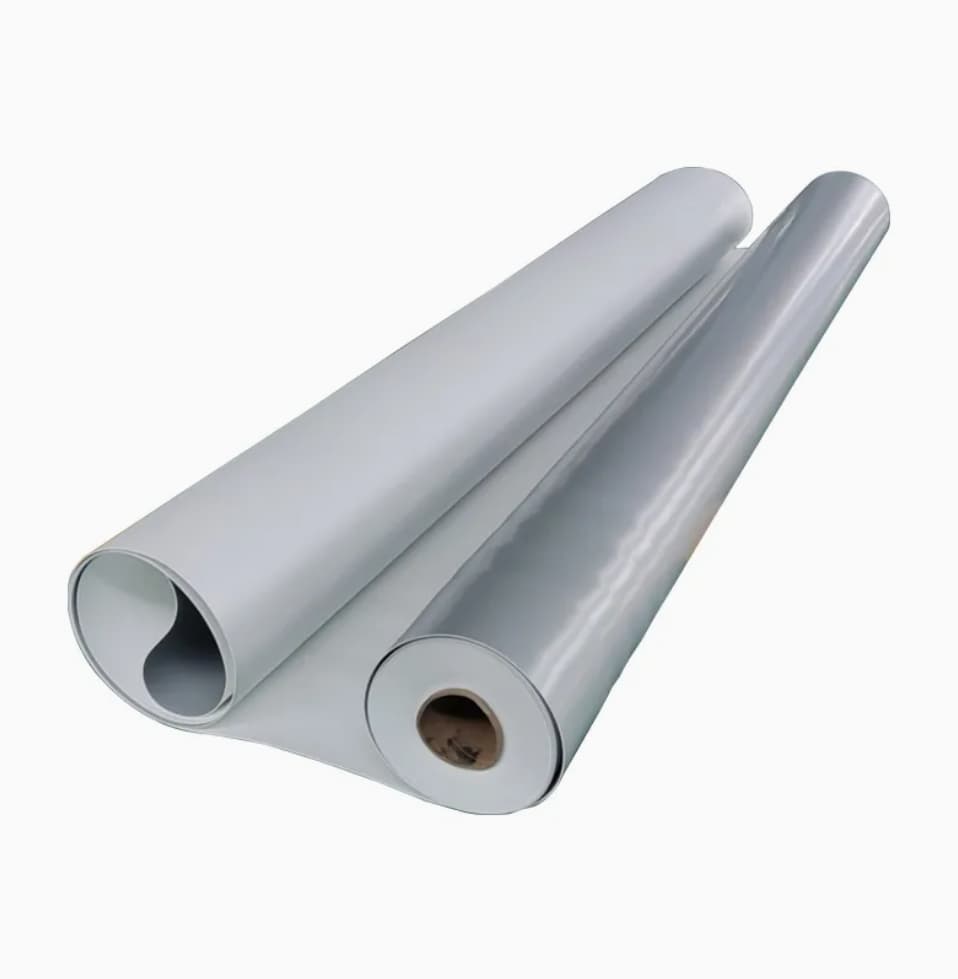
TPO waterproof membrane is a type of thermoplastic polyolefin (TPO) material made from advanced polymer technology that combines ethylene propylene (EP) rubber with polypropylene as the base material.
It features a polyester fiber mesh fabric as the reinforcement material and is produced using advanced processing techniques, resulting in a sheet-like waterproof material that can be rolled up.
TPO waterproof membrane can also be customized as TPO anti-root penetration waterproof membrane or TPO self-adhesive waterproof membrane according to needs.
PRODUCT CLASSIFICATION
Based on the composition, TPO waterproof membrane can be classified as homogeneous membranes (H Type), fabric-backed membrane (L Type) and reinforced membrane with internal fabric (P Type).
• Homogeneous Membrane (H Type):
A thermoplastic polyolefin waterproof membrane that does not use internal reinforcement materials or backing materials.
• Fabric-Backed Membrane (L Type):
A thermoplastic polyolefin waterproof membrane that is laminated with fabrics such as polyester non-woven fabric on the underside of the membrane.
• Reinforced Membrane with Internal Fabric (P Type):
A thermoplastic polyolefin waterproof membrane reinforced with polyester or fiberglass mesh fabric in the middle of the membrane.
Thermoplastic Polyolefin (TPO) Waterproof Membrane
PRODUCT FEATURES
• Eco-friendly: The membrane is free from fluorine, contributing to environmental protection and construction safety.
• Long-lasting flexibility: Manufactured with a special formula that provides high flexibility without plasticizers, preventing brittleness and ensuring a long service life.
• Reinforced strength: Contains an internal polyester fiber mesh to enhance tensile strength, fatigue resistance, and puncture resistance.
• Temperature-resistant: Maintains toughness at low temperatures of -40°C and retains mechanical strength at high temperatures.
• Strong sealing: Overlaps are hot-welded, forming a high-strength sealing layer.
PRODUCT PARAMETERS
Thermoplastic Polyolefin (TPO) Waterproof Membrane
Implementation Standard: GB27789-2011
| Serial number |
Project | Technical Index | |||
|---|---|---|---|---|---|
| H | L | P | |||
| 1 | Thickness of resin layer on the intermediate substrate / mm ≥ | – | – | 0.40 | |
| 2 | Tensile properties |
Ultimate tensile strength / N/cm ≥ | – | 200 | 250 |
| Tensile strength / Mpa ≥ | 12.0 | – | – | ||
| Ultimate tensile extension rate / % ≥ | – | – | 15.0 | ||
| Break extension rate / % ≥ | 500 | 250 | – | ||
| 3 | Dimensional change rate in heat treatment / % ≤ | 2.0 | 1.0 | 0.5 | |
| 4 | Low-temperature bendability | Crack-free at -40°C | |||
| 5 | Water impermeability | Water impermeability at 0.3MPa for 2h | |||
| 6 | Impact resistance | 0.5kg·m , Water impermeable | |||
| 7 | Static load resistance | – | 20kg Water impermeable | ||
| 8 | Peel strength of joint / ( N/mm ) ≥ | 4.0 or coil damage | 3.0 | ||
| 9 | Straight tear strength / N/mm ≥ | 60 | – | – | |
| 10 | Trapezoid tear strength / N/mm ≥ | – | 250 | 450 | |
| 11 | Trapezoid tear strength (70°C,168h) / % ≤ | 4.0 | |||
| 12 | Thermal aging at 80°C |
Time | 672h | ||
| Appearance | No bubbling/No cracking/No delamination/No bonding issues/No holes or voids | ||||
| Maximum tensile strength retention / % ≥ | – | 90 | |||
| Tensile strength retention rate / % ≥ | 90 | – | – | ||
| Tensile extension retention rate at maximum load / % ≥ | – | – | 90 | ||
| Elongation retention rate at break / % ≥ | 90 | 90 | – | ||
| Low-temperature bendability | Crack-free at -40°C | ||||
| 13 | Aging resistance |
Appearance | No bubbling/No cracking/No delamination/No bonding issues/No holes or voids | ||
| Tensile strength retention / % ≥ | – | 90 | 90 | ||
| Tensile strength retention rate / % ≥ | 90 | – | – | ||
| Tensile extension retention rate at maximum load / % ≥ | – | – | 90 | ||
| Elongation retention rate at break / % ≥ | 90 | 90 | – | ||
| Low-temperature bendability | Crack-free at -40°C | ||||
| 14 | Artificial climate accelerates aging |
Time | 1500h | ||
| Appearance | No bubbling/No cracking/No delamination/No bonding issues/No holes or voids | ||||
| Tensile strength retention / % ≥ | – | 90 | 90 | ||
| Tensile strength retention rate / % ≥ | 90 | – | – | ||
| Tensile extension retention rate at maximum load / % ≥ | – | – | 90 | ||
| Elongation retention rate at break / % ≥ | – | 90 | – | ||
| Low-temperature bendability | Crack-free at -40°C | ||||

 Waterproof Membrane)